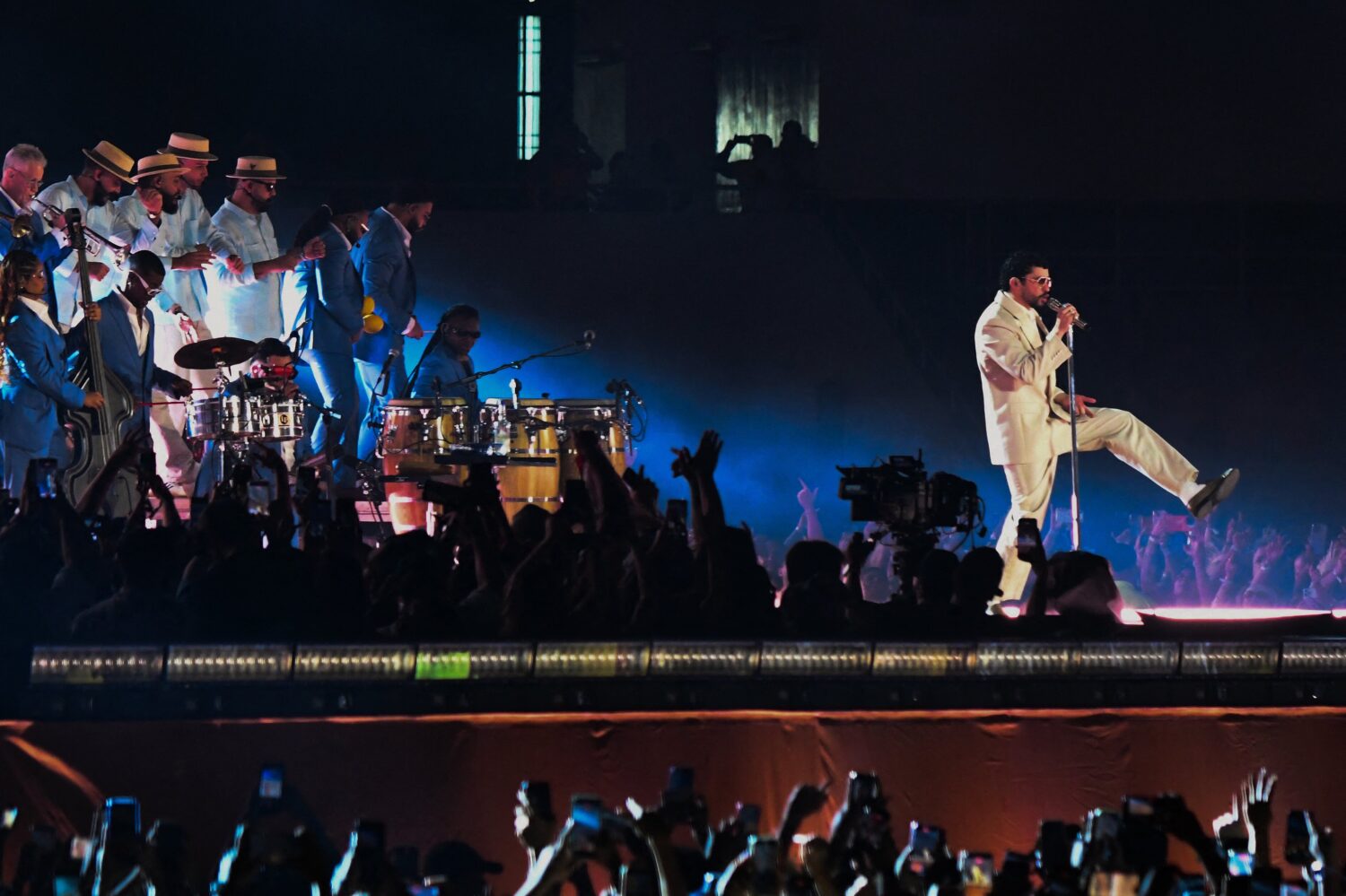
On February 8, 2026, Levi’s Stadium in Santa Clara, California, didn’t just host Super Bowl LX between the Seattle Seahawks and New England Patriots. It became the stage for one of the most talked-about, danced-to, and debated cultural moments in recent memory. Bad Bunny stepped out in an all-cream outfit, emerged from a sea of sugarcane stalks, and turned the biggest night in American sports into a vibrant, unapologetic celebration of Puerto Rican life, Latino pride, and pan-American unity. For 13 minutes and 41 seconds, the world watched history unfold—mostly in Spanish, packed with symbolism, and delivered with the kind of joy that made millions forget the score for a while.
This wasn’t just a halftime performance. It was a love letter to a culture that’s often sidelined, a subtle (and sometimes not-so-subtle) pushback against division, and proof that the biggest artist on the planet doesn’t need to sing in English to own the room. If you missed any details amid the frenzy—or want the full story behind the sugarcane, the “Ocasio 64” jersey, the FCC complaints, and those record-breaking social numbers—let’s break it all down.
How Bad Bunny Landed the Biggest Gig in Music
The announcement dropped on September 28, 2025, like a bombshell from Roc Nation, the NFL, and Apple Music. Bad Bunny—Benito Antonio Martínez Ocasio—would headline the Apple Music Super Bowl LX Halftime Show. He wasn’t the first Latino to grace the stage (he’d already joined Shakira and J.Lo in 2020), but he became the first to do it solo and almost entirely in Spanish.
For a kid who grew up in Vega Baja, Puerto Rico, working at an Econo supermarket while uploading tracks to SoundCloud under the name Bad Bunny, this was the full-circle moment. The NFL wanted global reach, and nobody delivers it like the reggaeton king who’s topped charts in multiple languages without compromising his roots. Pre-show buzz was electric. Fans speculated about guests, set pieces, and whether he’d address politics. Benito kept it simple in interviews: “It’s going to be a huge party.”
Who Is Bad Bunny? The Man Behind the Bunny Ears
If you’re new to the phenomenon, picture this: a 31-year-old Puerto Rican who went from grocery-store clerk to the most-streamed artist on the planet. His breakthrough came with tracks like “Dákiti” and “Yo Perreo Sola,” blending reggaeton, trap, and heartfelt lyrics about everything from heartbreak to social issues. By 2026, he’d already won Album of the Year at the Grammys for Debí Tirar Más Fotos, just one week before the Super Bowl.
What sets him apart isn’t just the beats—it’s the authenticity. He sings about gentrification in Puerto Rico, mental health, and loving who you are, all while rocking nail polish and skirts when he feels like it. Watching him command that stage felt personal for so many. I remember blasting his early mixes in my car years ago, never imagining he’d one day turn the Super Bowl field into a block party that crossed oceans.
The Production: Turning a Football Field into Puerto Rico
Production designer Julio Himide, creative director Harriet Cuddeford, and art director Mónica Monserrate didn’t hold back. Over 380 performers, 300+ dancers, no motorized vehicles (NFL rules), and moving stages created a living, breathing Puerto Rican neighborhood right there in California.
The set opened with towering sugarcane fields—workers in traditional jíbaro hats swinging machetes. A pink-and-yellow casita (that classic Puerto Rican house) sat center stage, complete with a rooftop for dancing. Domino tables, a piragua (shaved-ice) stand, a nail salon, and even a barber shop popped up as vignettes. It felt like you’d been transported to a Sunday afternoon in San Juan or a Brooklyn block party. Smoke, lights, and perfectly timed camera cuts made it cinematic. Hamish Hamilton directed it flawlessly, proving halftime can be theater.
The Setlist: Every Song, Every Vibe
Bad Bunny didn’t just play hits—he wove a story. Here’s the full official setlist from Super Bowl LX, with quick context on why each mattered:
- “Tití Me Preguntó” (opener) – The party starter from his Grammy-winning album, perfect for introducing the sugarcane fields and Latino unity.
- “Yo Perreo Sola” / “Safaera” / elements of “Party” – High-energy reggaeton anthems celebrating independence and fun, performed from the casita rooftop.
- “VOY A LLeVARTE PA PR” – A direct invitation to bring everyone to Puerto Rico, keeping the energy soaring.
- “EoO” – Mashup vibes with classic reggaeton nods, showing respect to the genre’s roots.
- “MONACO” (violin arrangement) – A quieter, emotional moment where Benito delivered a spoken message about believing in yourself.
- “Die With a Smile” (salsa version with Lady Gaga) – The big crossover; Gaga brought sazón, and a real couple even got married onstage during it.
- “BAILE INoLVIDABLE” – Joyful dance track that had the whole stadium moving.
- “NUEVAYoL” – Shoutout to the diaspora, with real-life Brooklyn icon Toñita serving a shot of rum.
- “LO QUE LE PASÓ A HAWAii” (with Ricky Martin) – Powerful guest spot highlighting gentrification parallels.
- “El Apagón” / “CAFé CON RON” (with Los Pleneros de la Cresta) – Protest energy meets celebration; jíbaros climbed power poles, then the party continued.
- “DeBÍ TiRAR MáS FOToS” (closer) – The album title track, ending on reflection and triumph.
Every track was shortened and seamless, clocking in at just under 14 minutes but feeling like a full concert.
Special Guests Who Made It Unforgettable
Lady Gaga delivered a salsa-flavored “Die With a Smile” and danced like she belonged in the casita. Ricky Martin, the pioneer who paved the way for Latin crossover, joined for “Lo Que Le Pasó a Hawaii”—a full-circle moment. Traditional bomba and plena group Los Pleneros de la Cresta added authentic percussion to “Café Con Ron.”
Celebs dotted the set too: Cardi B, Karol G, Young Miko, Pedro Pascal, Jessica Alba, and more danced around the house. Toñita from Brooklyn’s Caribbean Social Club served drinks during “Nuevayol.” And a young boy (actor Lincoln Fox) received a Grammy replica from Benito—a nod to inspiring the next generation. Even a Puerto Rican sign-language interpreter made sure everyone felt included.
Hidden Meanings: Symbolism Packed Into Every Frame
This show was layered like a good plátano. Sugarcane? Colonial history and jíbaro resilience. The light-blue Puerto Rican flag elements? A quiet nod to independence. Power poles with workers climbing them during “El Apagón”? Hurricane María blackouts and ongoing struggles with infrastructure.
The casita represented home and resistance to gentrification. The football spike at the end read “Together We Are America,” while Benito listed countries from Chile to Canada and said, “God bless América… Seguimos aquí.” Same-sex dance pairs, inclusive casting, and a real wedding onstage screamed love over hate. The “Ocasio 64” jersey honored his uncle Cutito, who introduced him to the NFL.
It wasn’t preachy—it was joyful resistance. You could dance without catching every reference, but those who did felt seen.
Reactions: Love, Hate, and Everything In Between
Social media exploded—4 billion views in the first 24 hours, a new record. Fans called it the best halftime ever for its energy and representation. Puerto Ricans worldwide felt immense pride. Even non-Spanish speakers were up dancing.
On the flip side, some conservative voices (including calls from politicians) labeled it “inappropriate,” sparking FCC complaints about lyrics and “explicit” elements (none actually violated rules—the songs were cleaned up, and Spanish helped). A counter “All-American Halftime Show” with Kid Rock drew far fewer eyes. Benito stayed above the noise, letting the performance speak.
Viewership and Lasting Impact
The show averaged 128.2 million viewers domestically—fourth all-time behind Kendrick Lamar (2025), Michael Jackson (1993), and Usher (2024). It peaked higher in spots and crushed on Telemundo with 4.8 million. Internationally, it dominated.
Beyond numbers, it boosted streams of Debí Tirar Más Fotos, spotlighted Puerto Rican issues, and proved Spanish-language dominance on the biggest U.S. stage. Representation matters, and this one shifted conversations about who “America” includes.
How It Compares to Legendary Halftime Shows
| Show | Year | Viewers (millions) | Vibe | Standout Element |
|---|---|---|---|---|
| Michael Jackson | 1993 | 133.4 | Iconic solo | Moonwalk magic |
| Usher | 2024 | 129.3 | High-energy R&B | Roller skates & guests |
| Kendrick Lamar | 2025 | 133.5 | Cultural statement | Deep messages |
| Bad Bunny | 2026 | 128.2 | Joyful Latin party | Symbolism + inclusivity |
Bad Bunny’s ranks right up there—not for shock value, but for heart and cultural depth. It didn’t need pyrotechnics; the people and stories carried it.
Where to Watch It Right Now
Head to the official YouTube upload (over 61 million views already) or Apple Music for the full 13-minute film. The setlist playlist is live too. Relive the sugarcane entrance, the wedding, or that final spike whenever you need a mood boost.
People Also Ask About Bad Bunny’s Halftime Show
What songs did Bad Bunny perform at the Super Bowl?
The setlist ran from “Tití Me Preguntó” through “Debí Tirar Más Fotos,” mixing party anthems with deeper tracks. Full breakdown above.
Who were the guests in Bad Bunny’s halftime show?
Lady Gaga, Ricky Martin, Los Pleneros de la Cresta, plus dozens of celebs dancing in the casita and real community figures like Toñita.
Was Bad Bunny’s Super Bowl performance entirely in Spanish?
Mostly yes—the first of its kind for a solo headliner. A couple English lines with Gaga, but the heart stayed in Spanish.
How many people watched Bad Bunny’s halftime show?
128.2 million average, with peaks over 137 million. Social views hit 4 billion fast.
Why was Bad Bunny’s halftime show controversial?
Some critics pushed back on the Spanish lyrics, cultural themes, and politics. The FCC investigated but found zero violations.
FAQ
Did Bad Bunny address politics during the show?
Indirectly through symbolism and his closing message of unity. No direct speeches, but the “Together We Are America” football said plenty.
Can I buy merch from the performance?
Zara collaborated on the all-cream look, and Adidas on the sneakers. Official NFL/Apple Music drops followed quickly.
What album inspired most of the set?
Debí Tirar Más Fotos—fresh off its Grammy win. Tracks like the title song and “El Apagón” anchored the narrative.
Will there be a tour or residency tied to this?
Bad Bunny has hinted at more Puerto Rico shows, but nothing confirmed yet. The halftime energy suggests he’s just getting started.
Bad Bunny didn’t just perform at the Super Bowl—he claimed the moment for millions who rarely see themselves centered on that scale. He reminded us that culture thrives when it’s shared without apology, that joy can be resistance, and that sometimes the best way to win is simply to dance.
Whether you caught every layered reference or just vibed to the beat, one thing’s clear: this halftime show will be replayed, analyzed, and celebrated for years. And if you’re still humming “BAILE INoLVIDABLE” days later? Same. We’re all a little more connected because of it.
(Word count: 2,812)